ArtWod Logo
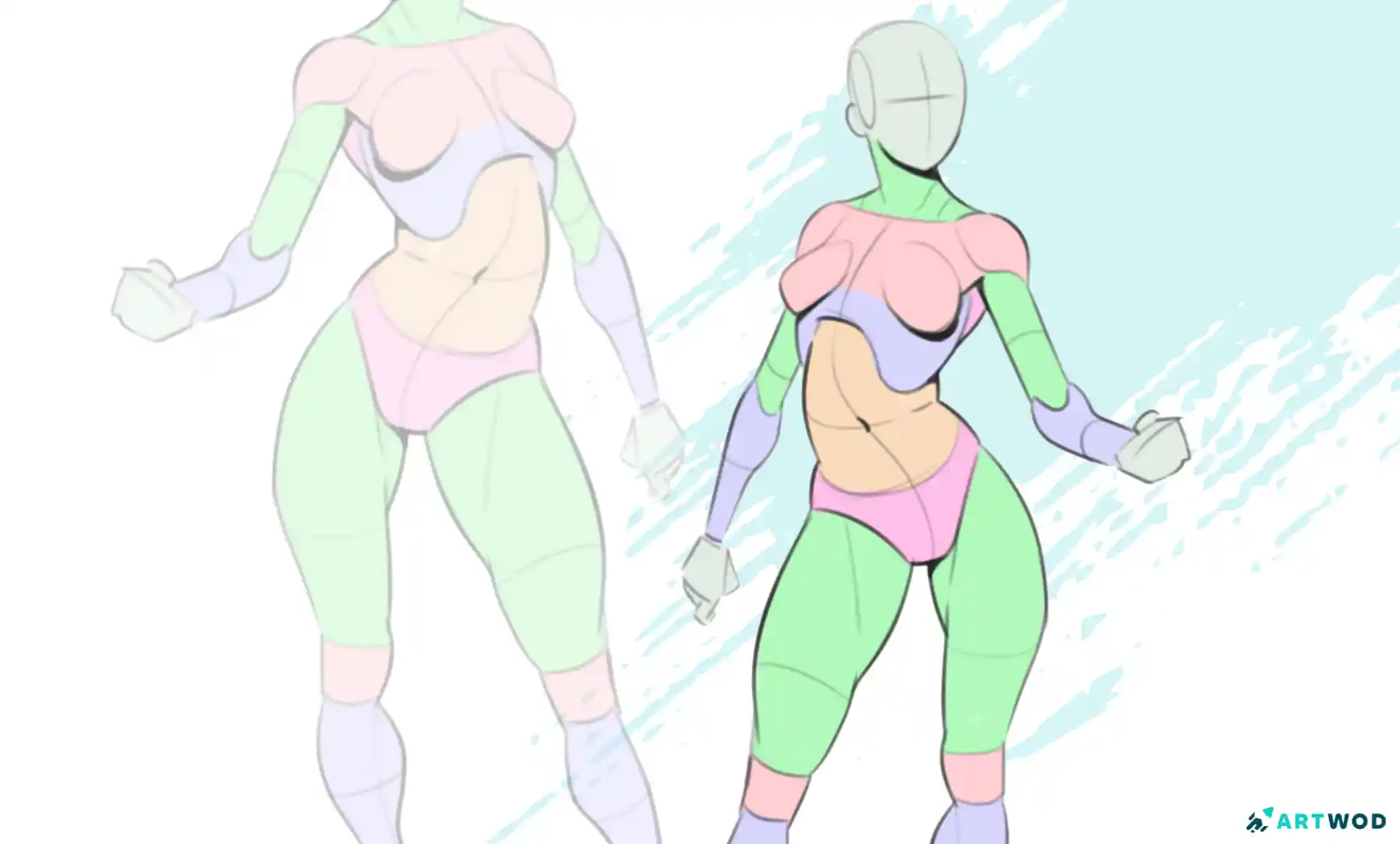
Anatomy breakdown of a female body

Why Anatomy Drawings Look Stiff and Unnatural

Drawing, Figure, Design

Why Your Anatomy Drawings Look Stiff

You’ve spent hours studying muscle charts. You’ve memorized the deltoids, the lats, and the obliques.Yet, when you go to draw a character in action, they look like a stiff, static action figure rather than a living, breathing human.

Why? Because you’re drawing a collection of parts, instead of a unified organism.

Most beginners fall into the trap of detailing individual muscles before they’ve established the life of the pose. If you want to break away from stiff drawings and finally master dynamic figure drawing, you need not thinkin about anatomy as a biology lesson but start seeing it as a study of flow (we are 65% water after all).

The Connection Between Gesture and Anatomy

Gesture is the soul of your drawing; anatomy is the body. If you start with anatomy, the gesture gets buried under layers of detail. And remember to exaggerate your gesture drawings as much as possible. Because when structure comes into play, they are gonna become stiffer.

Why Copying Muscles Creates Stiffness

When you copy muscles directly from a textbook, you are drawing "labels" rather than forms. Muscles stretch and compress depending on the pose. If you draw them in their "neutral" textbook position, your figure will always feel frozen in time. Try doing studies of athletes in movement instead of static bodybuilders, this will help you understand how muscles move.

Flow Lines and Movement in Anatomy

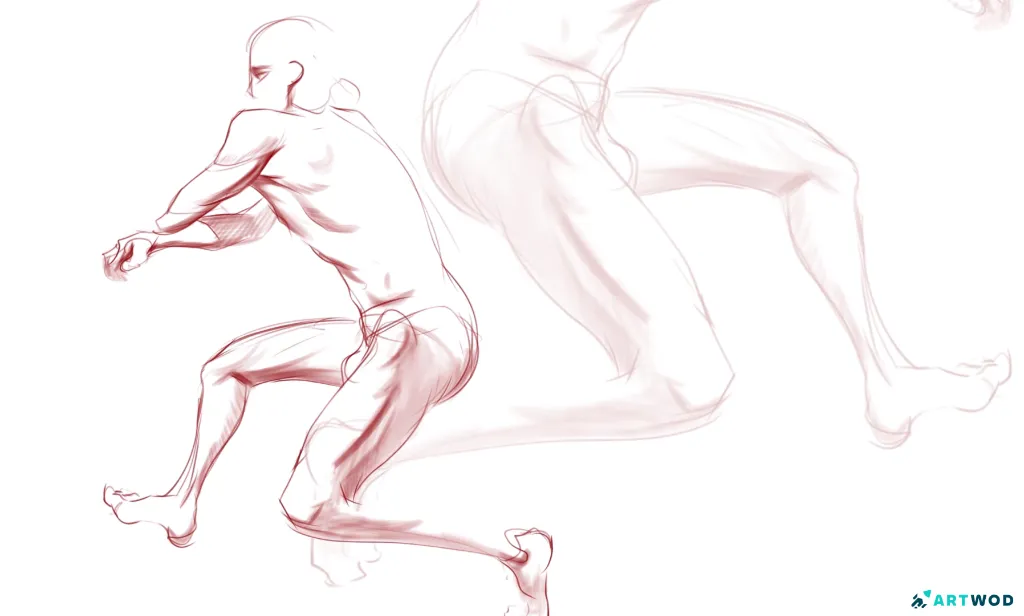
Think of the body like a river. Your lines should connect and carry the viewer’s eye from the head, through the torso, and down to the legs. If your lines stop and start at every muscle group, the movement dies. Use long, sweeping flow lines to connect body parts. These are the lines that connect the body parts instead of dividing them.
Gesture drawing 2d in red pen

Gesture drawing 2d in red pen

Balance and Rhythm in Figure Drawing

Add rhythm by alternating curves - if one side of the body is stretching, the other should be compressing. Read more about this animation principle here.

Common Figure Construction Mistakes

  • The Rigid Spine: Drawing the spine as a straight stick instead of a flexible, S-curved column.


  • Parallel Alignment: Keeping shoulders and hips perfectly level. As we discussed, you need to tilt them to create attitude.


  • Ignoring Foreshortening: Flattening out limbs that are reaching toward or away from the viewer.

  • Understanding Dynamic Poses

    Dynamic poses are built on asymmetry. Never make both sides of the body do the same thing. If the character is running, one arm should be high, one low; one knee bent, one straight. Asymmetry creates the rhythm that leads to a dynamic, fluid pose.

    Anatomy Simplification Techniques

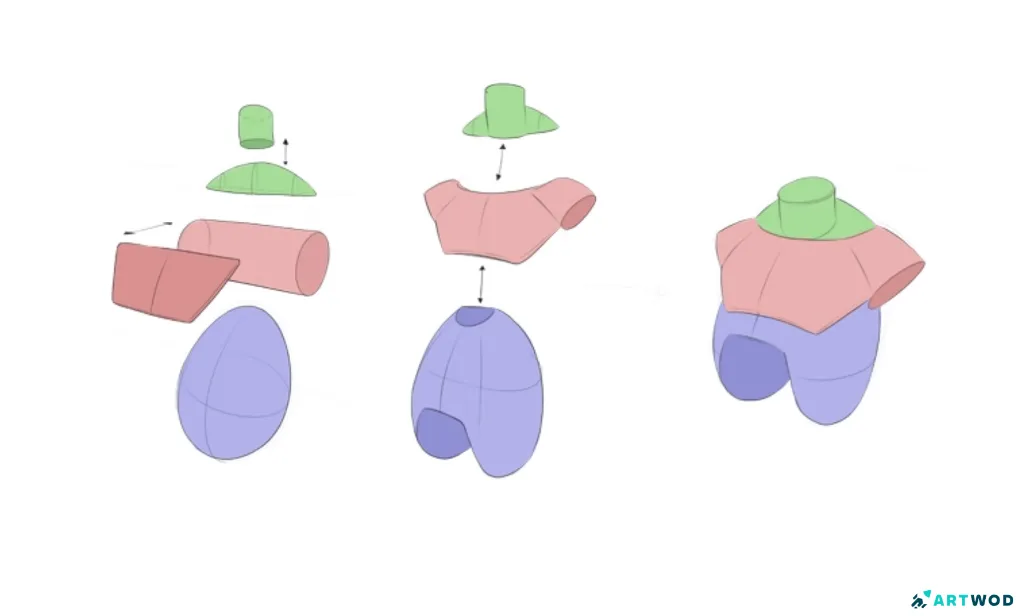
    Stop drawing complex muscle attachments. Simplify the torso into a bean shape or a box. Simplify the limbs into cylinders. Once you have a 3D primitive shape in the correct perspective, the muscles will naturally fit onto the surface like clothing.
    Torso simplification step-by-step

    Torso simplification step-by-step

    Why Structure Matters More Than Details
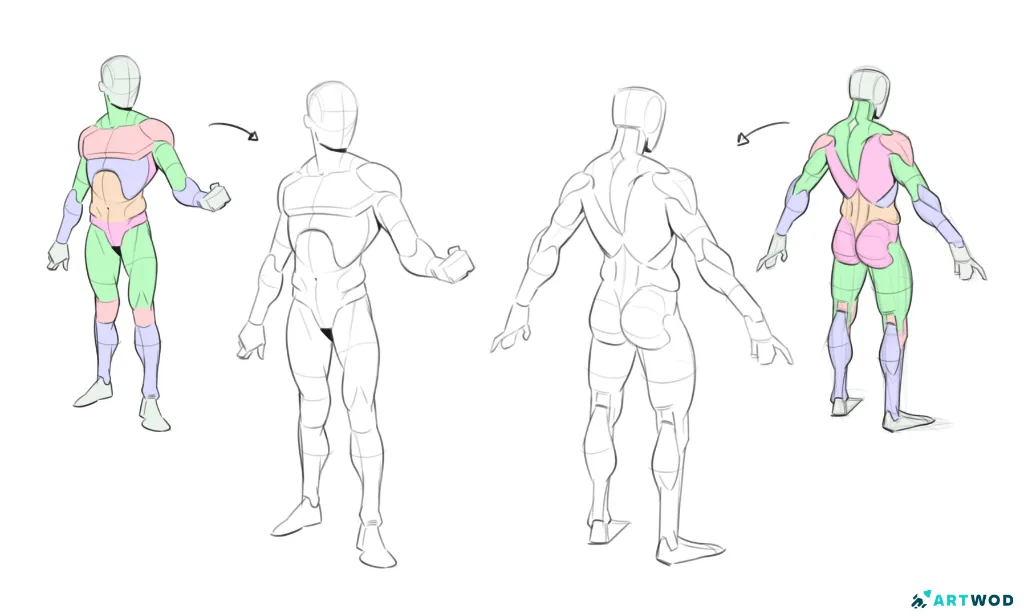
    A beautifully rendered forearm is worthless if it's attached to a torso that's in the wrong place. Structure is the architecture; anatomy is the wallpaper. Never start applying wallpaper before the house is built.
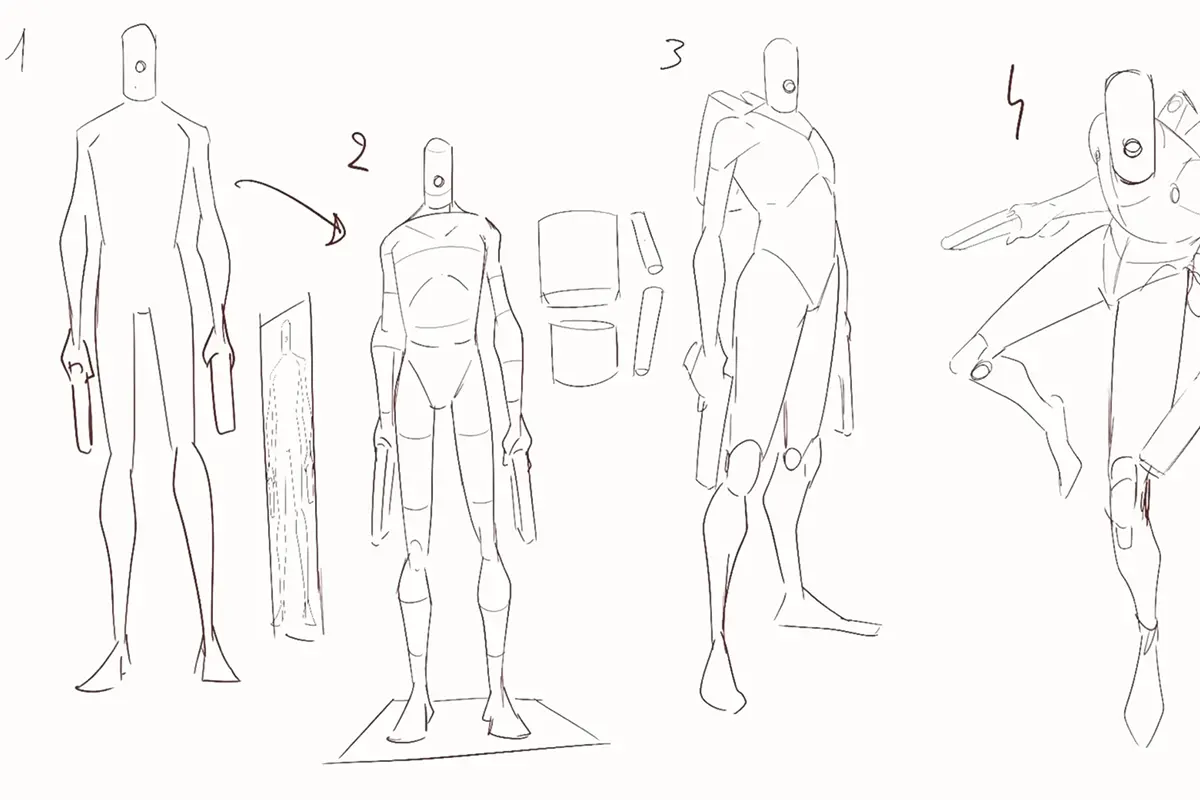
    Anatomy drawing examples

    Anatomy drawing examples

    Improving Organic Body Movement

    Practice drawing "moving" figures rather than "posing" ones. Use your imagination to place your character in a high-energy action like reaching for a ledge or jumping over an obstacle. This forces you to prioritize the energy of the pose over the exact location of a bicep.

    Anatomy Exercises for Dynamic Drawing

  • 30-Second Gestures: Set a timer and do 20 rapid gesture sketches. Don't draw a single muscle. Focus only on the weight, balance, and rhythm.

  • The "Bean" Method: Draw the torso as a simple 3D bean shape. Tilt it, twist it, and bend it before adding any limbs.

  • Value Over Detail: Paint your anatomy studies in 3 tones. If the silhouette of the pose is boring, no amount of muscle detail will save it.

  • You can't fix a stiff pose by adding more anatomy; you have to fix the gesture underneath. Don’t let your hard work go to waste - get a professional anatomy pose critique to see exactly where your flow is breaking.

    Looking for a consistent way to level up? Start your daily online art workout today and stop drawing static, stiff figures for good!

    Author: Artwod team
    Published: Aug 17, 2026
    Fun and structured learning experience
    Artwod logo
    Learn how to draw in a fun and effictive way!